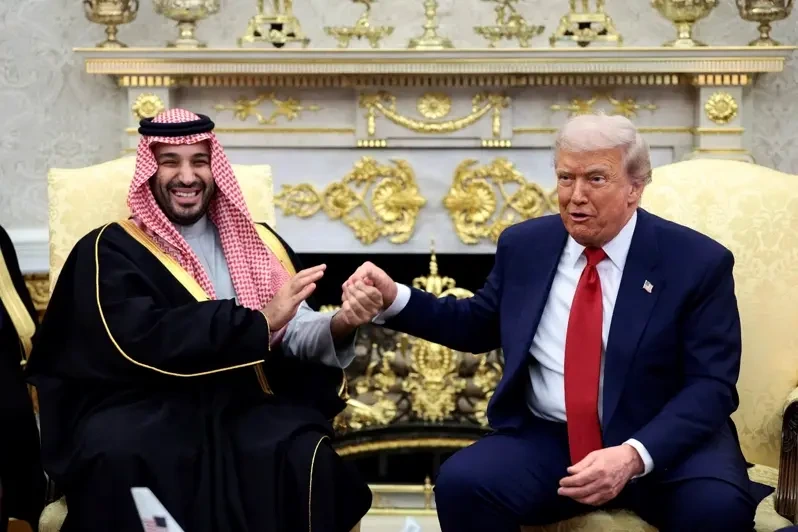
According to a New York Times report, as the conflict between Saudi Arabia and the Iran-backed Houthi movement in Yemen escalates, U.S. President Donald Trump faces a dilemma, wavering on whether to deploy troops to assist the Saudis. Two individuals familiar with the operational briefings revealed that Trump had at one point ordered the Pentagon to prepare for airstrikes; he decided to call off the operation at the very last moment—even after U.S. commanders had approved the target list, bombs had been loaded onto fighter jets, and the first wave of attacks was poised to launch.
Trump now finds himself in a bind: Saudi Arabia is not only a key U.S. ally but has also demonstrated that it holds leverage capable of constraining Washington. In May, the Saudis denied the U.S. access to their airspace and domestic military bases, effectively blocking the Trump administration’s plan to deploy U.S. forces to escort commercial oil tankers through the Strait of Hormuz. However, the Houthis have thus far deliberately avoided attacking U.S. vessels; should the U.S. military intervene on behalf of Saudi Arabia, it could not only shatter the existing tacit understanding between the two sides but also further expand the conflict with Iran—which has been brewing for nearly seven months—and drag the United States into a new battlefront in Yemen.
Over the past two weeks, Trump has vacillated on the issue of military action in Yemen. On the 16th, he told advisors he opposed airstrikes, only to reverse course the next day after receiving a personal plea for help from Saudi Crown Prince Mohammed bin Salman, at which point he ordered the Pentagon to prepare for an attack; however, on the 20th, he hit the brakes again, deciding to hold off on the operation. In a telephone interview with Fox News correspondent Trey Yingst on the morning of the 20th, Trump stated that the U.S. has maintained contact with the Houthis, and that the group has now agreed not to engage in hostilities against the United States.
The White House has declined to publicly detail Trump’s decision-making process, with a senior official stating only: “The U.S. has a defense agreement with Saudi Arabia, and we will always defend our allies.”
However, a senior administration official revealed that most of Trump’s inner circle harbored deep reservations about U.S. involvement in the conflict with the Houthis, with some outright opposed to it.
The official disclosed that if the U.S. ultimately decides to enter the fray, airstrikes might be coordinated with a new ground offensive planned by Yemeni government forces; however, there is little optimism within the U.S. regarding the potential effectiveness of such a move, with doubts raised as to whether renewed airstrikes could truly force the Houthis to back down.
In the spring of 2025, the U.S. military bombarded the Houthis for over 50 consecutive days, striking more than 1,000 targets and expending approximately $1 billion in weaponry and ammunition in the first month alone; yet, the Houthis continued to fight back. Ultimately, Trump announced a ceasefire in less than two months in exchange for the group halting attacks on U.S. vessels.